PROJECT OVERVIEW.
Project Details
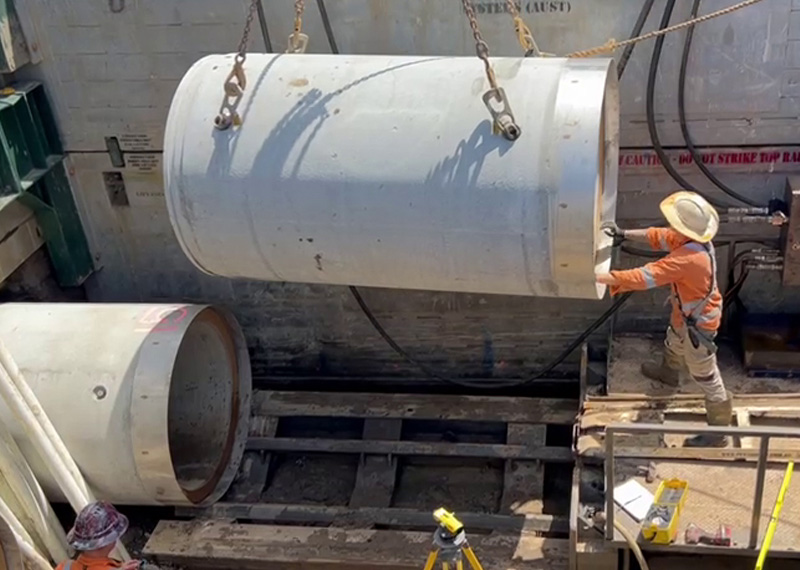
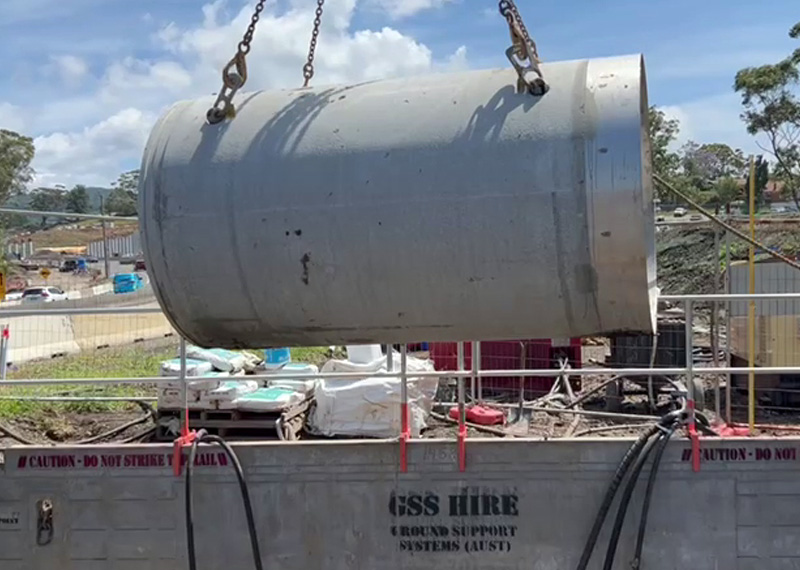
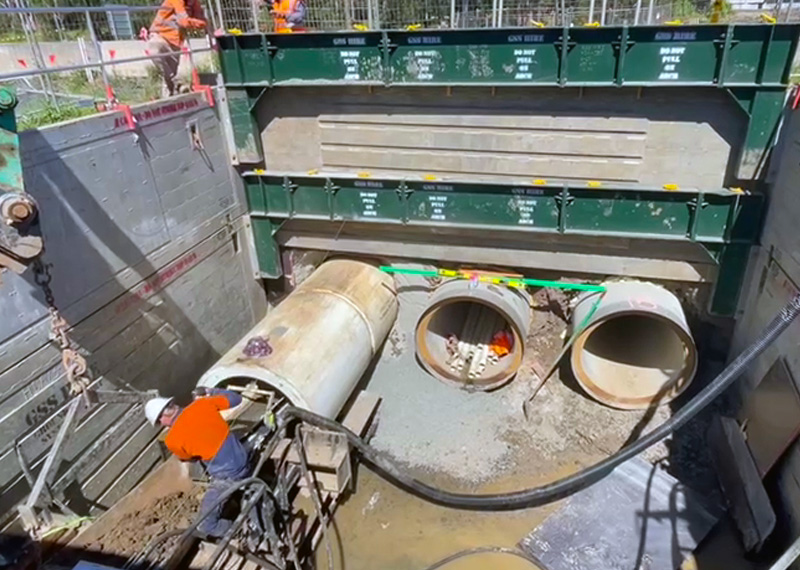
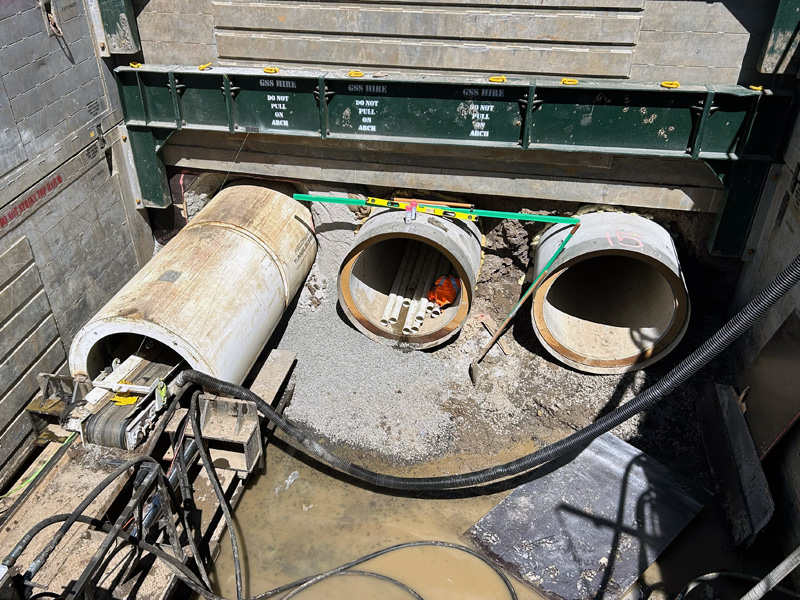
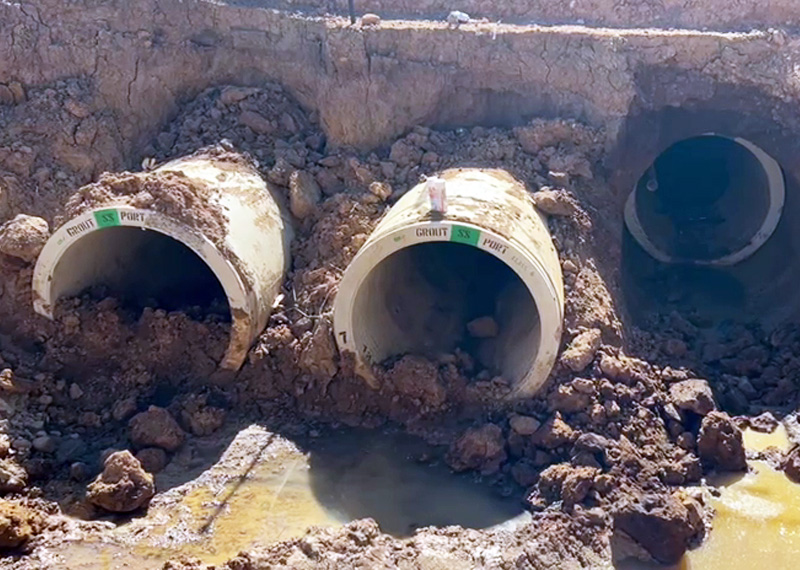
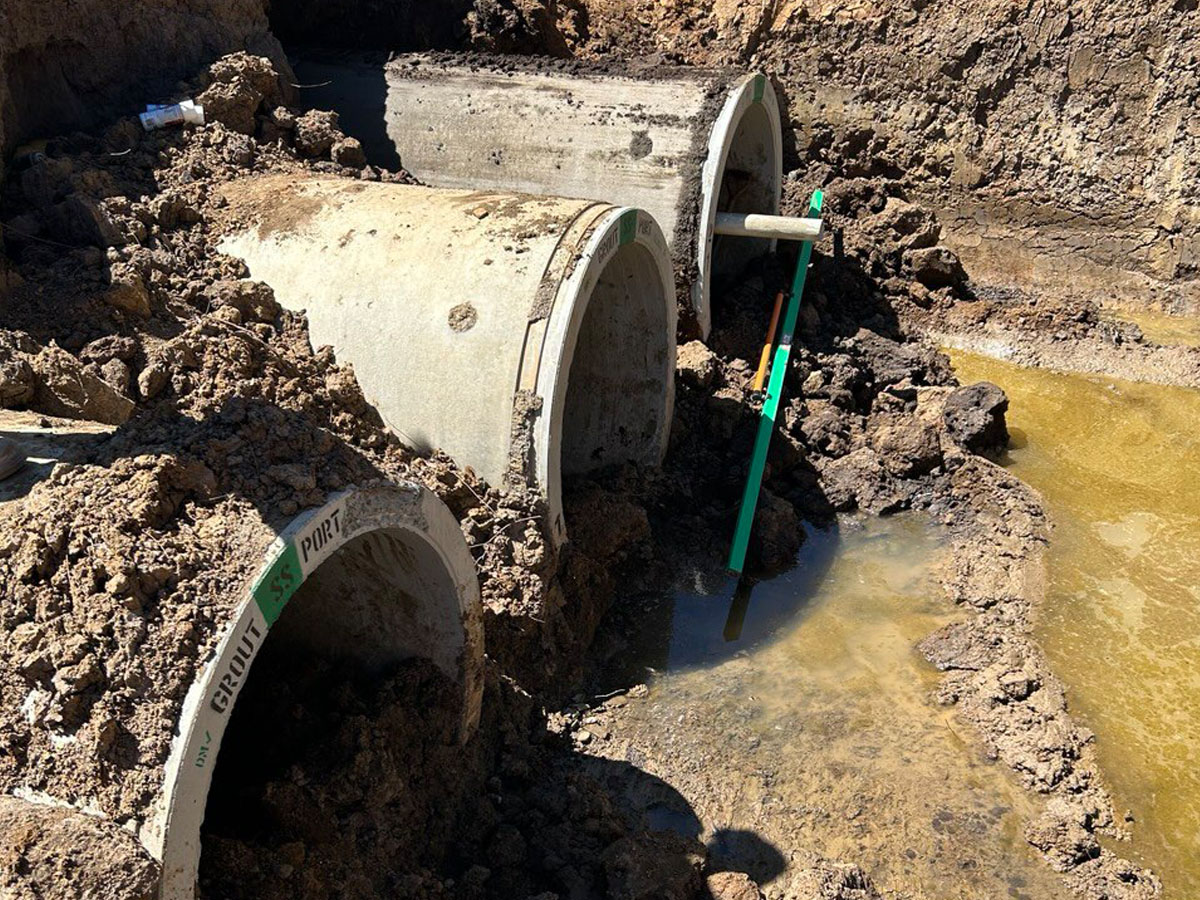
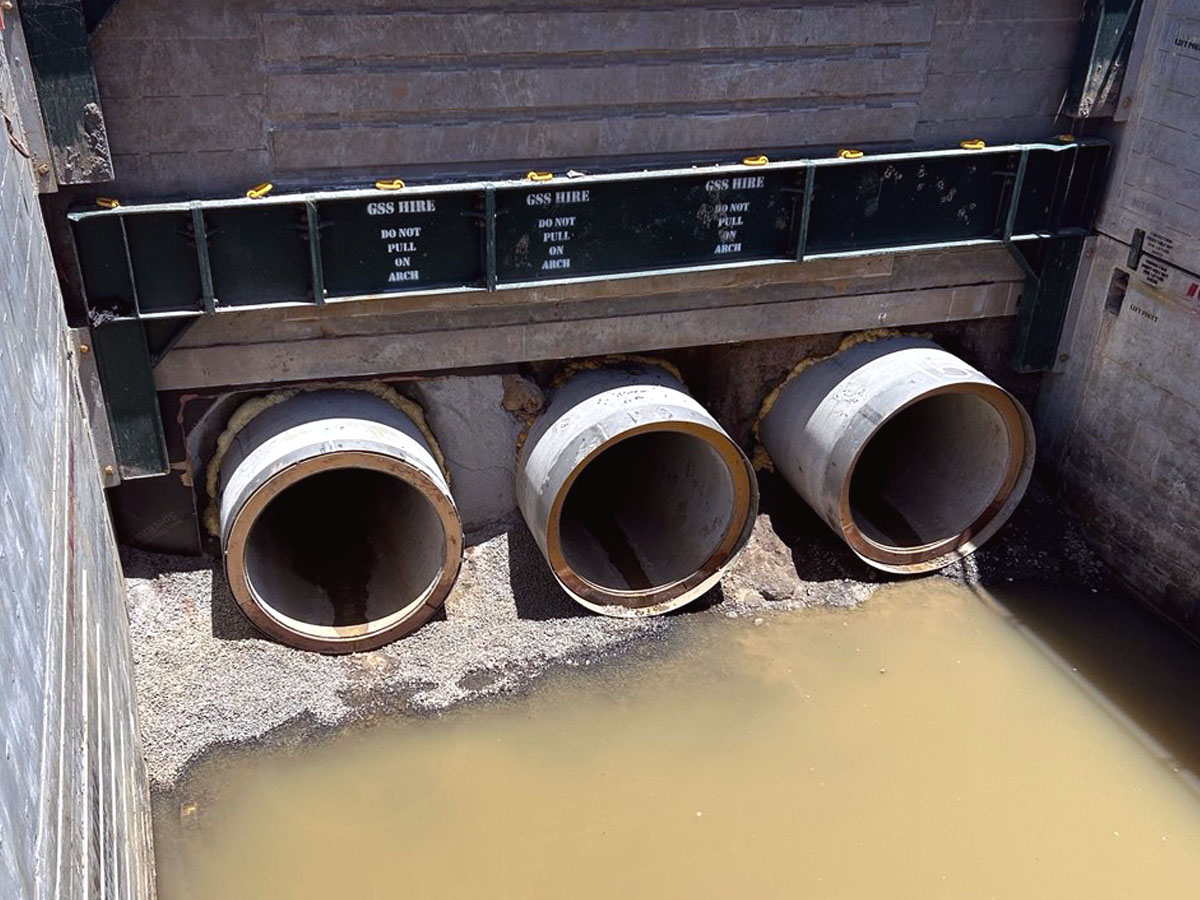
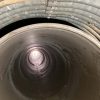
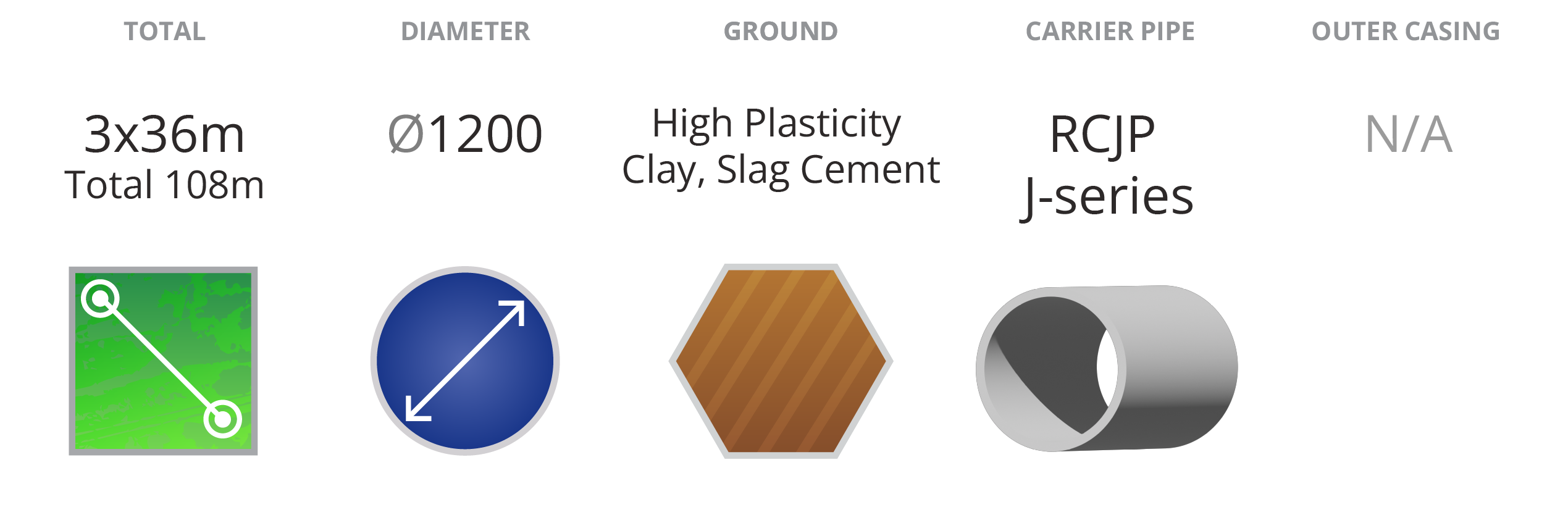
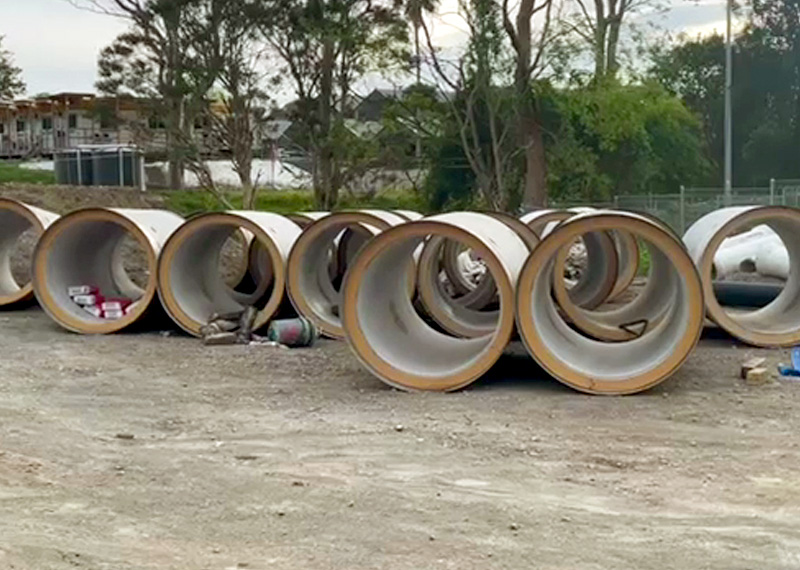
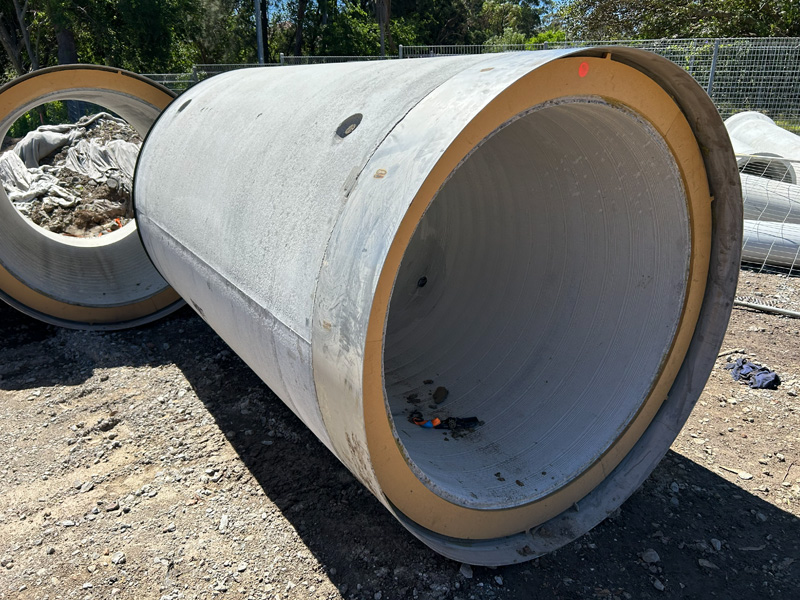
Pezzimenti’s work required the installation of 3 1200mm ID RCJPs under the motorway each 36m long for stormwater.
Of critical importance was keeping the traffic flowing while work proceeded so ground settlement was a key issue and closely monitored. Based on information from the geotechnical consultants, settlement was time dependent, so it was critical to sequence the work to tunnel and then grout the annular overcut immediately before proceeding to the next tunnel.
The ground was a mix of fill ground and original high plasticity clay.
A specialist tunnelling operator and off sider were brought in from the Queensland crews to operate the mechanical digger arm and manage the job.
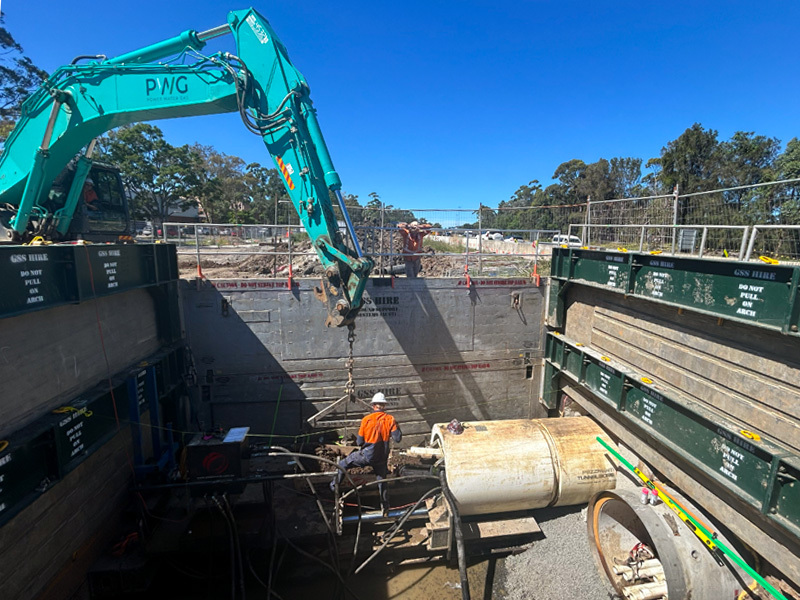
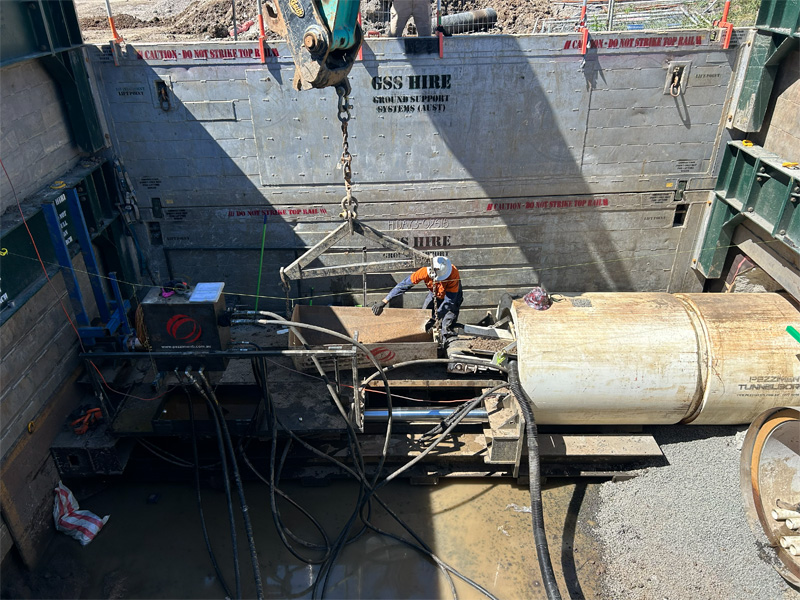
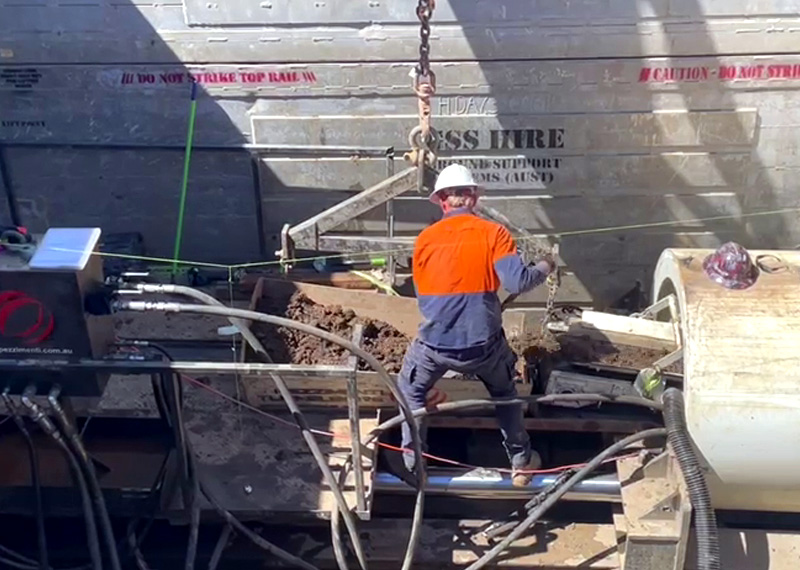
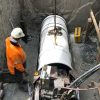
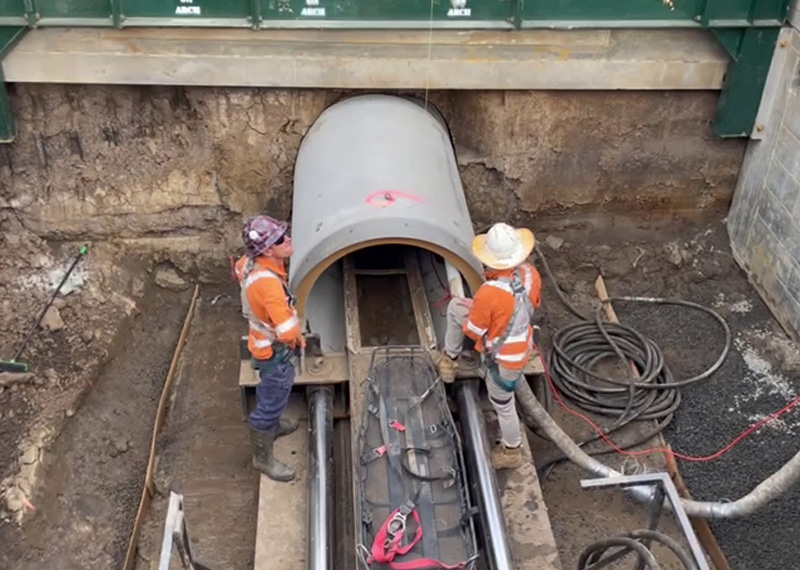
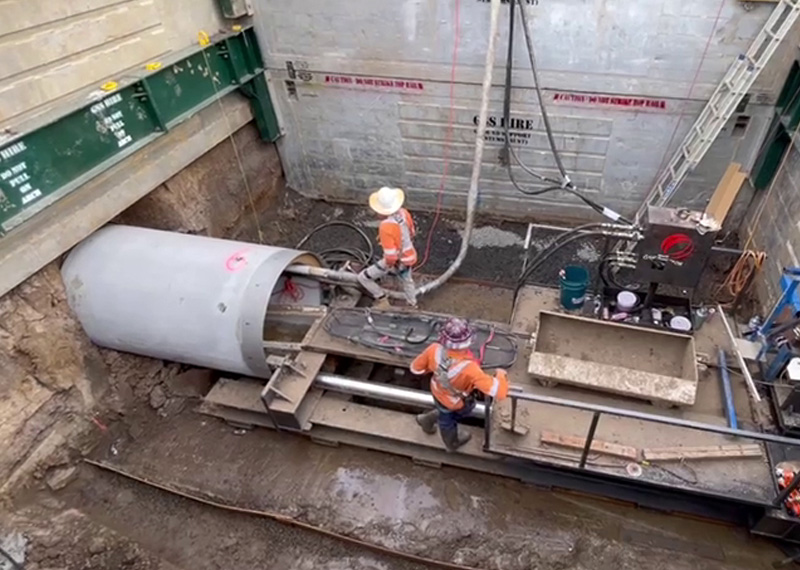
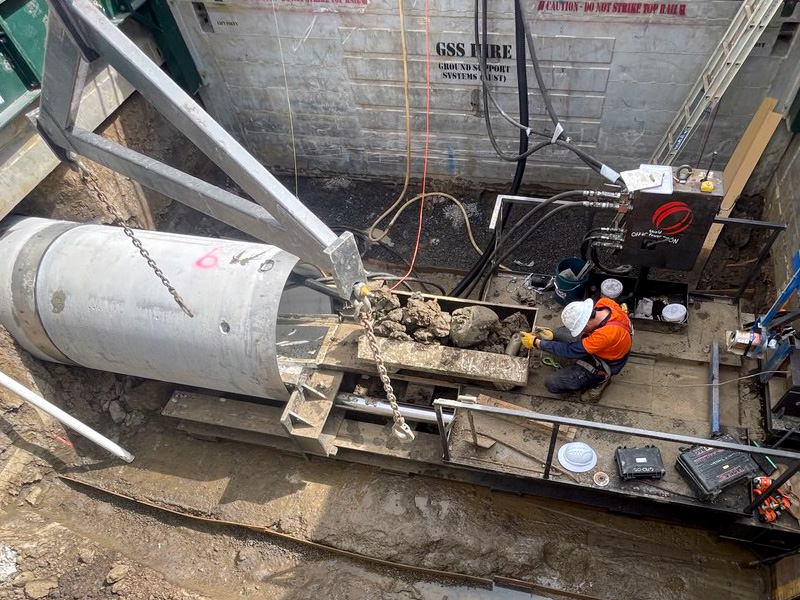
A single shaft 7.2m long x 6.6m wide was excavated and shored. The set up required 4 days to pour the slab, set up the laser, lower in the frame, set up the hydraulics and ancillary equipment.
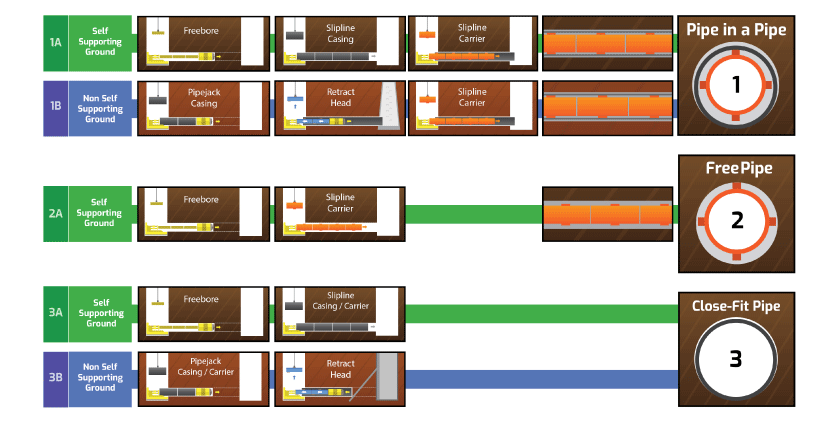
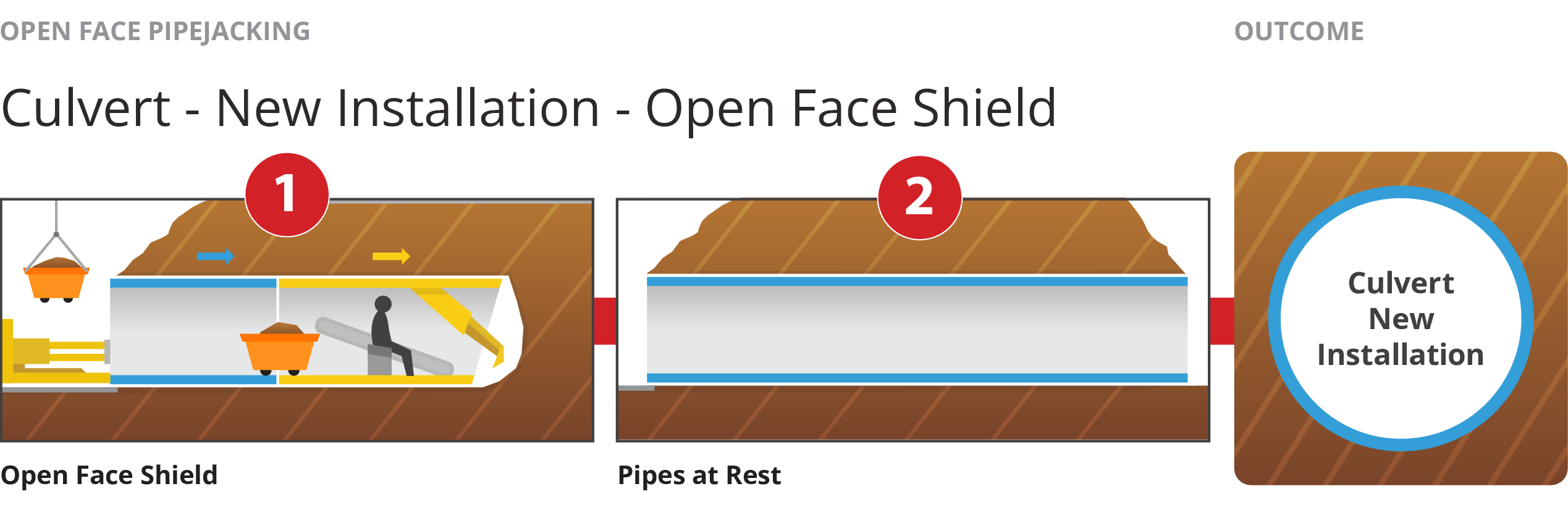
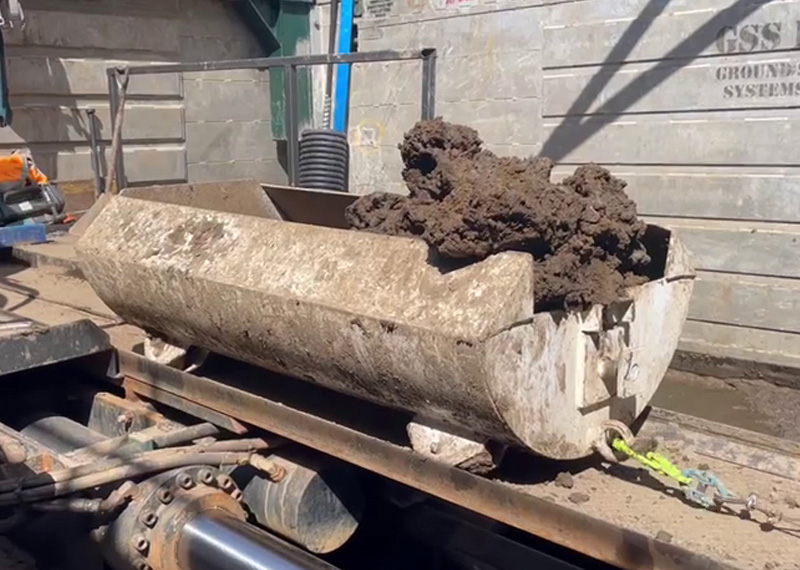
Open Face Pipe Jacking requires an operator to enter a steerable shield and excavate with a mechanical digger arm. The material is pulled onto a conveyor belt which then loads a wheeled skip bin. The wheeled bin is then winched back to the shaft, lifted out by an excavator and emptied on site. At no point is the ground unsupported due to the design and shape of the shield
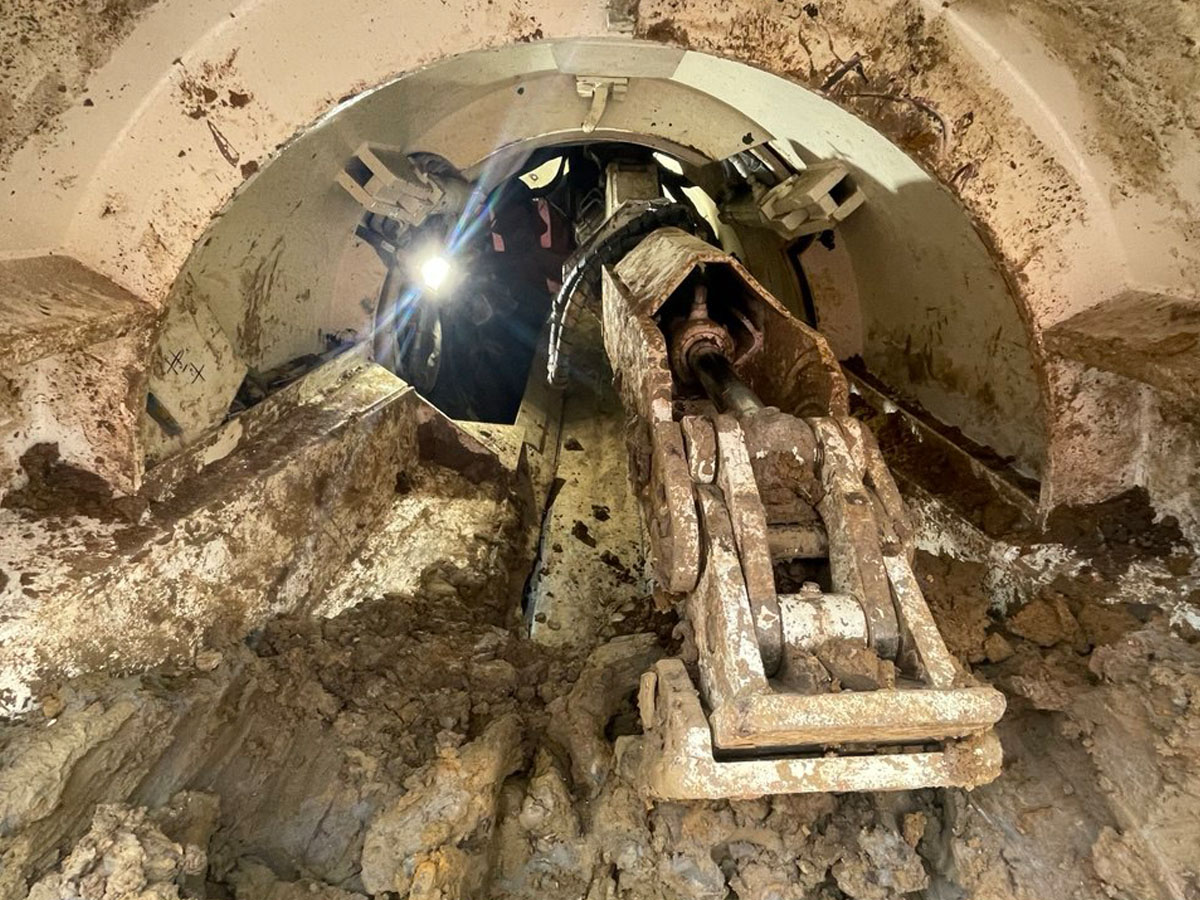
Tunnel 1
Progress was steady at about 3m per day though significantly slowed by the high plasticity clay for the first 7 days. The high plasticity clay always slows down any type of excavation and this was certainly the case on this job. The ‘sticky” clay was primarily at the top of the tunnel and probably contributed to the very low settlement recorded.
Progress was temporarily halted at the 23m (out of 36m) mark when a layer of slag (assumed to have come from the nearby steelworks) was encountered at the top of the tunnel. Minor water inflow also began at the same time. Jack hammering of the slag/cement by hand proved slow as the material punctured easily but did not break off. As the obstruction was just outside the fog line of the Motorway, a decision was made to open the road on a night shift, exhume the cement/slag and replace it with a weak stabilised sand. The project delay happened around the October Long Weekend so the interstate crew headed home while the night works were completed by FH.
It is rare that a latent condition requires a dig down as was required on this job. The difficulty to hand-excavate in the slag/cement and its relatively shallow depth meant an intervention by dig down was the quickest and most economical option. The annular space around the pipes was injected with bentonite to prevent the pipes from being frozen in while jacking was delayed.
Ground stabilisation was completed in 9 days and work recommenced. The axial load on restart was initially high at 108T until the seal was broken after which it returned to 72 T. The remaining 13m was tunnelled to the 36m mark in another 4.5 days. The annular overcut was grouted via the grout ports cast into the pipes after the pipes were pushed into their final position.
Settlement of the motorway was precisely monitored but only ‘insignificant’ settlement occurred, A maximum settlement of 5mm was recorded with the vast majority of readings being 2mm or less.
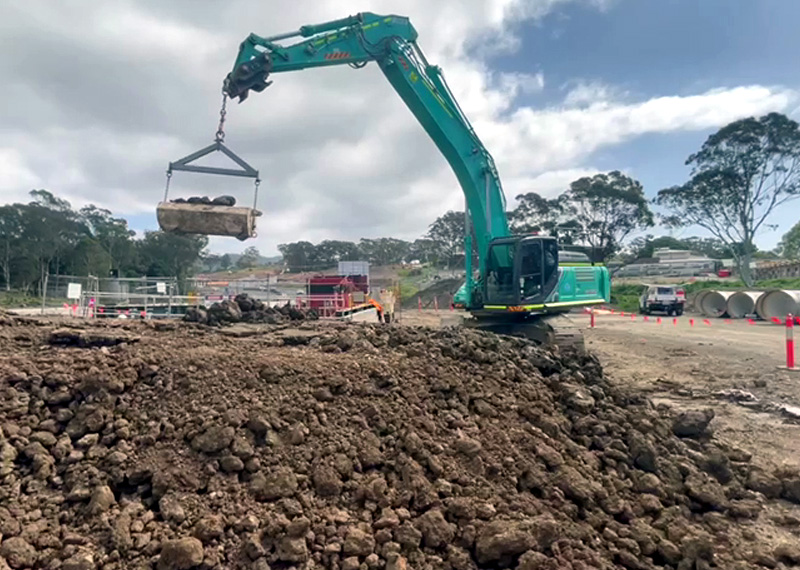
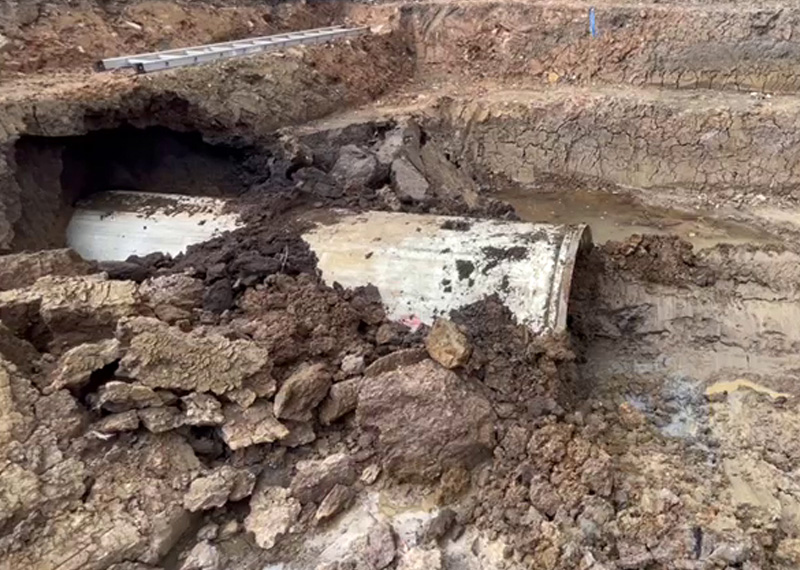
Tunnel 2
Tunnel 2 was on the north side of Tunnel 1. The transfer of the equipment to Tunnel 2 took 4 days. Pipe jacking took 9 days working (with 2 RDOs on top of that) to complete the 36m drive an average of 4m per day. Jacking loads were again very low at 60T, settlement was again insignificant with a max recorded of 5mm and the accuracy achieved was within 1mm vertically and 3mm horizontally. The high plasticity clay was again encountered in the upper portion of the tunnel. This slowed progress due to the material wanting to ‘ball up’ into soccer ball size pieces and sticking to everything it touched- the digger arm blade, the conveyor, the skip bin. Emptying the skip bin was time consuming. Again the annular over cut was grouted after the shield was retrieved from the exit pit and the pipes pushed to their rest position.
Tunnel 3
Tunnel 3 was commenced in early November 2025. The tunnel was excavated in 9 working days i.e. 4m/day average. Axial loads were again low at 60T, settlement was again insignificant, accuracy was within 3mm in both directions and the high plasticity clay again reared its ugly head to slow progress.